All posts by KFord

An Offer of Spiritual Support

Will writes:

The Season of Lent is an important time for all Christians – a time to deepen our relationship with God through prayer, reflection and study, as we prepare for Holy Week and our annual remembering of the Suffering, Crucifixion and Resurrection of Jesus Christ.

For many years now we have offered a full schedule of different services, groups and talks to help us in all of this. Alongside this programme of discussion and worship, we once more want to offer a special opportunity for every adult at St Mary’s to have a 45 minute conversation about their faith.

This year I’d like to offer that conversation to be with me. That isn’t because other members of the Ministry Team were not available or were unwilling to be involved. Not at all. But I am left wondering why so few people have taken up this opportunity in previous years and wonder whether the uncertainty about who you might meet with has been part of that. There can be nothing more important that I do in my working week than to help us as a congregation and as individuals to grow towards God. I’d love the excuse not to be doing paperwork and admin for much of Lent because lots of people have taken up this opportunity to meet and we’re having these conversations!

It is a considerable commitment on my part to do this but I hope it clearly demonstrates just how important I think it is. You might like to talk about what you struggle with about prayer and believing in God. You might like to talk about what is worrying you in your life about family, health or money. You might like to use it to talk about your life and faith journey. Or you might like to use it to ask questions about why we do things in church the way we do and what things mean but never had the chance or the confidence to find out until now.

What I can guarantee is that it will be positive and fruitful, that whatever we talk about will never be shared with anyone and will not be referred to again by me (but you’re welcome to follow it up with me if you want to – but you would need to initiate that), and that there is no such thing as a dumb question, except the one you never asked.

As people of faith, our spiritual health and well-being is something we should take seriously, but often we don’t have the chance to think about our faith and prayer life, or talk it through with someone. Well, we have that chance this Lent with an opportunity for you to talk about whatever you want to discuss in your faith – in total confidence and as a way of being encouraged, listened to and supported in your relationship with God, and without any sense that you’re being judged or tested in some way.

Please fill out the slip enclosed in this leaflet and return it to Church as soon as possible so that I can fix up a convenient time for us to get together over the coming weeks.

Will

CLICK HERE TO DOWNLOAD THE REPLY SLIP FOR SPIRITUAL SUPPORT

Choral Evensong Blog: Sunday 1st March, 6.30pm

This article by Damian Cranmer is the latest post in the Choral Evensong Blog, with insights into the background, history and composers of the music sung by the choir at our monthly Choral Evensong services.


The introit for this service is ‘How sad and solitary’ a metrical version of the first verse of The Lamentations of Jeremiah. (How doth the city [Jerusalem] sit solitary, that was full of people.) This is Song 24 from a collection produced by George Wither in 1623 and entitled ‘The Hymns and Songs of the Church’.

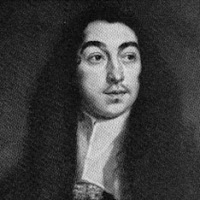
Orlando Gibbons

There are 90 of these “hymns and songs” and Orlando Gibbons apparently supplied 18 tunes to cover the variety of metres. I say apparently because some of the tunes are less obviously the work of Gibbons, and may have been adapted from Gibbons’ work by others, possibly Wither himself. The best of the tunes live on in current hymnbooks and seven are included in our latest A&M, including tunes to “Eternal ruler”, “Love of the Father” and “Forth in thy name O Lord I go”.

In collections of Gibbons’ music, however, the tunes have always been associated with the first verse of the first song to which Wither attached them, and this is why Song 24 goes to the first verse of the Lamentations. Gibbons supplied only treble and bass parts to Wither and alto and tenor parts have been added in versions for the hymnbooks. However, Gibbons liked the richer sonority of five parts and was a master of counterpoint, so the opportunity has been taken (by the current writer) to produce something more elaborate than is usual.

The psalm for this evening is Psalm 8, ‘O Lord, our governor, how excellent is thy name in all the world’ set in the Parish Psalter to a single chant by Sir Frederick Gore Ouseley. I’m not a great fan of single chants and this one starts high and goes low, not totally appropriate for such a confident psalm. I blame the compilers of the Parish Psalter for this, and not Ouseley; we have much to be grateful to him for.

Thomas Tomkins

There are two items of Thomas Tomkins (1572-1656), his Responses and the Mag and Nunc of his First Service. I repeat some of what I have written before about Tomkins. His responses are not as well known as, particularly, those by Byrd and William Smith of Durham, although they are now quite regularly heard on the BBC’s Choral Evensong. Like those of Smith, these responses are freely composed, that is they don’t include the plainsong theme in the tenor, but there is more use of choral recitation.

Tomkins is interesting because he outlived his fellow Elizabethan and Jacobean composers by more than 30 years, long enough for his post as organist at Worcester Cathedral to become redundant when the city surrendered to parliamentary forces in 1646. By this time he had been in post for 50 years and I had always thought of him as happy to serve his time away from the capital, a bit like Weelkes in Chichester. In fact he was a member of the Chapel Royal as singer and organist and must have spent much time in London.

Tomkins’ works survive specifically in a publication, Musica Dec sacra, put together by his son some 12 years after his death. It may be, then that we can give more credence to the title ‘First Service’ than with some other composers where numbering of canticles can be more random. This service does show similar attributes to others in its simple 4-part harmony, largely chordal harmony and lack of word repetition. There is nothing of the passion that Tomkins created in his remarkable anthem, ‘When David heard’. It would seem from several points of view that this work dates from the earlier part of his life.

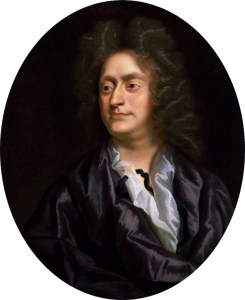
Henry Purcell

It was only three years after his death that the great Henry Purcell was born. The time was of Restoration and French influence at court, but Purcell managed to create an idiom which seems today to be utterly English. He was able to write the most beautifully simple folk-like melodies and clothe them with his own particular harmony which always relied on making each part logical in its own right. But he was also able to write the most complex chromatic counterpoint and our anthem tonight is one of the best examples.

‘Hear my prayer, O Lord’ is a short piece of only 34 bars which so elaborate that it is generally thought to be part of an incomplete, or incompleted, project. There are two ideas: the first is a simple 6-note setting of “Hear my prayer, O Lord” all on one note except for the 5th (to “O”) which is a third higher. This is heard alone in the alto part. Then Purcell sets “and let my crying come unto thee” to a rising chromatic phrase emphasising “cry” in best word-painting mode. But he quickly decides that this phrase will also work descending. And these three patterns work a maze of wonderful interplay in a lush 8-part texture where never more than two of the eight voices are singing the same words at the same time until the final bar. And what a typical Purcellian final scrunch that last cadence is.

This collection of works suggests that Jonathan will be playing the chamber organ for this service, and this is confirmed by his choice of voluntary, Benedictus sit Deus Pater by the composer Thomas Preston, who seems to have spent time in Oxford, Cambridge and Windsor before his death shortly before 1560. He is known for a handful of organ pieces related to the mass and a few for other instruments. Benedictus was intended for the Offertory.

Damian Cranmer