Category Archives: Choral Evensong Blog

Choral Evensong Blog: Sunday 1st October, Harvest Festival

First a short follow-up to the Choral Matins of August. This was well supported by both choir and a congregation of over 50 and I hope we may be able to sing this service, now rare in parish churches, again soon. I spoke to one current member of the congregation who first sang Matins in St Mary’s choir in the early 1940s. Someone should gather the reminiscences of such people together; and there are photographs of the choir in 1920 and 1996 in the vestry but nothing in between. Who has any material?

There’s a new (well I’ve only just come across it) website for Choral Evensong, titled appropriately choralevensong.org.  It lists services by locality and I was pleased to see that St Mary’s is listed, but as yet there is no picture and no detail of the music: both can fairly easily be remedied, I hope. It also gives links to related articles and there is a good one from Religion News Service at the moment on the growing popularity of the service. Our Evensong this month is for the occasion of Harvest Festival.

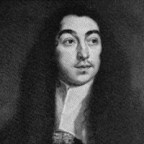
Thomas Tomkins

The responses of Thomas Tomkins will get a second airing; I wrote about the longevity of Tomkins (1572-1656) in relation to these responses in July. I’ve been listening to some of his music recently and it’s interesting how little his choral music differs in style from the norm of 1600. At times he almost outdoes Gibbons in his use of false relation. One of his best pieces is “When David heard”, published in 1622 in his Songs of Three, Four, Five and Six Parts, the last but one of the many madrigalian publications of the Elizabethan and Jacobean composers.

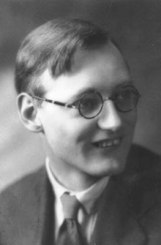
Heathcoate Statham

The canticles will be sung in the setting in E minor by Heathcote Statham (1889-1973). Heathcote, by the way, is a first name, but Statham (doesn’t sound right, does it?) has never managed to lose it, unlike contemporaries such as Dyson, Darke and Howells. For the majority of the First World War, he was organist at the cathedral in Calcutta, but returned to St Michael’s Tenbury, where he had been a chorister, to take up the post of organist in 1918. But the greatest part of his active life was as organist of Norwich Cathedral (1928-1966), and the E minor Magnificat and Nunc Dimittis were written in the middle of this time. The style is in keeping with the prevalent idiom of church music in the first half of the last century, but the changing time signatures show an awareness of the rhythm of the words and an ability to avoid stock patterns. The tonality is mostly E minor, but one section of the Magnificat and all of the Nunc Dimittis are in E major.

Herbert Brewer

The anthem is “Blessing, Glory, Wisdom and Thanks” by Herbert Brewer, a setting of words from Revelation and Psalms 148 and 106, which was composed for the Gloucester Diocesan Choral Festival in June 1909 and is eminently suitable for such a festival as this.   We have noted before how important these festivals were and how much music was written for them. The piece is in three sections corresponding to the three sources of the text and the organ part is significant. Wikipedia claims that Brewer (1865-1928) “lived in Gloucester his whole life” but that seems a little wide of the mark. He grew up in Gloucester and was organist at the cathedral for over 30 years from 1896, but held posts in Oxford, Bristol, Coventry and Tonbridge in the intervening years. His work in Gloucester involved much activity outside the cathedral, particularly in relation to the Three Choirs Festival, which he conducted on eight occasions, and for which he wrote several major works on both serious and light-hearted subjects. Of his compositions, Grove’s Dictionary (4th edition 1940, and unchanged in today’s online version) stated that “he seemed happier in the concerts of the Shire Hall than in the cathedral.” Sadly, in the light of this, he is known today mostly for his Magnificat and Nunc Dimittis in D which remains in the repertoire of cathedrals and which St Mary’s choir have sung on a number of occasions.

Fela Sowande

The voluntary is Obangiji by Fela Sowande (1905-1987), a Nigerian musician who is regarded as the father of modern Nigerian art music. His early education was based on the cathedral in Lagos and was in traditional European music. He came to London in 1934 and contributed widely to the musical scene. He was the soloist in Gershwin’s Rhapsody, played with Fats Waller and accompanied Adelaide Hall on the organ. He went back to Nigeria for a time before settling in the USA where he held several research and teaching posts. He composed extensively and, although I have not heard Obangiji, we can be fairly certain that there will be more to this piece than the traditional organ postlude.

Damian Cranmer
Reformation Choral Matins: Sunday 20th August, 11.15am

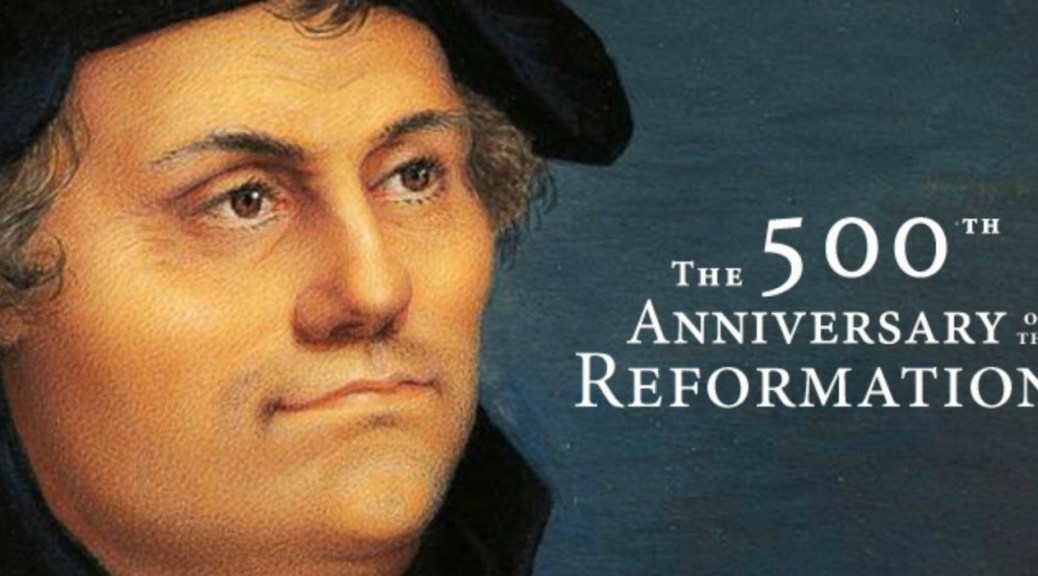
2017 is the 500th Anniversary of the Reformation

Sunday 20th August, 11.15 am

Choral Matins with glorious music sung by St Mary’s Choir

Short Address by The Revd Will Gibbs: ‘What does the Reformation means for us today?’

All welcome


Music for Choral Matins by Damian Cranmer

No Choral Evensong in August, but, a little over a year after this column first called for it, we are to get a Choral Matins. Many thanks to Jonathan and Will. Firstly, though, are you for one or two ts? I’m for only one because of the linguistic link back through the French matin to the Roman god of the morning, Matuta. But there’s more to it. The first Prayer Book of King Edward VI of 1549 has “An order for mattyns dayly through the yere”, but elsewhere uses Matins. I can find no mention of Matins in the second Prayer Book of 1552, which uses only “Morning Prayer”. And the only reference to “Mattins” (and, for that matter, Evensong as well) in the 1662 BCP is in the table of Proper Lessons for Sundays and Holy-Days. The order of service is for Morning Prayer, and the psalms are set for use at Morning Prayer and Evening Prayer. All of which makes me wonder why Matins remains such a familiar term for the traditional morning service.

The Morning and Evening Prayers, or Matins and Evensong, of the Prayer Books of Edward VI were a skilful reworking of material from the canonical hours, Matins from Matins, Lauds and Prime, Evensong from Vespers and Compline. The shape of each is the same, Confession and Lord’s Prayer, Preces, portion of Psalter, two lessons, two canticles, Apostles’ creed, Responses, collects, anthem and prayers. The Preces and Responses are identical in both services, and we shall sing the setting of William Smith of Durham. Smith (1603-1645) is, as far as I’m concerned, unknown except for these responses, but it was these responses which led the way for the introduction, in the 20th century, of the more adventurous settings which dominate today’s choral services. Smith’s remain the most recognisable of the more elaborate settings.

A hundred years ago, most cathedrals had sung Matins and Evensong every day of the week. Evensong continues to thrive, but Martin Thomas in his book English Cathedral Music and Liturgy in the Twentieth Century makes an interesting comment on the demise of regular weekday Matins:

The reasons for this decline [as claimed by the paper The Present State of Cathedral Music of 1934] were not connected to the growing liturgical emphasis on the Parish Communion and its cathedral equivalent: ‘there is no evidence…. that the decline in the practice of singing Matins daily is due to the singing of Holy Communion instead’. Rather, it was a combination of the difficulty of retaining lay clerks unless they had independent means, and the growing unwillingness of head-teachers and parents of the choristers to allow choristers to miss such a large part of the school day, that had been the most significant factors in the decline.

On Sundays, both in cathedrals and parish churches, the history is quite different; gradually throughout the 1900s, Communion took over from Matins as the main Sunday morning service. It would be interesting to know when regular Choral Matins stopped in Redbourn. Any former members of the choir with memories? When I played in Petersfield in the 1970s we had weekly Communion and Matins, both sung with choirs – difficult then, and unsustainable for long.

Matins, and particularly the Te Deum, were the natural vehicle for public celebration until well into the last century with the Festival Te Deums of Vaughan Williams and Britten, and the Coronation Te Deum of Walton as notable examples. Handel wrote Te Deums to celebrate the Treaty of Utrecht (1713) and victory at the battle of Dettingen (1743). I, for one, have little idea of the significance of these events, and there may be others who know of them only through the music. There is some evidence that at the time the British public was less interested than the Hanoverian exiles. So, pace Shakespeare, Handel’s music after 300 years “gives life to” these unmemorable events.

If you’re going to revive Matins, you can’t do better than go for the canticle settings by Stanford, and we’ll sing his Te Deum and Jubilate in C. Stanford knew that, if you were going to get home for lunch, you needed not to dwell too much over the text of the Te Deum, and there is no repetition of the words. But as always Stanford is able to create a satisfying form by repetition of musical material. The Jubilate ends with the same jubilant Gloria, characterised by antiphonal effects between choir and organ, as the more well known Magnificat and Nunc Dimittis from the same service. The anthem is “O thou, the central orb” by Charles Wood (1866-1926). Like Stanford, he was an Irish composer though from Armagh in the north, and I have mentioned before how the Celts managed to avoid the excess of sentimentality of the English Victorians. Think of the wonderful Welsh and Irish hymn tunes of the period. Wood has contributed many of the most enduring pieces of church music of the early 20th century, and “O thou, the central orb” is one of his best.

In the month of Isobel’s and my Golden Wedding, Jonathan has kindly offered to play the piece that my father wrote for our marriage in August 1967. So Philip Cranmer’s ‘Toccata for a Wedding’, published by OUP in 1969, will be the voluntary.

Damian Cranmer

Choral Evensong Blog: Sunday 2nd July 2017

First an update on last month’s column: within a week of writing “although we don’t (yet) applaud sermons and anthems”, I was in an Anglican church where the congregation burst into spontaneous applause at the end of the anthem!

Thomas Tomkins

And so to the music for our July Evensong. The responses will be sung in the setting by Thomas Tomkins (1572-1656). These responses are not as well known as, particularly, those by Byrd and William Smith of Durham, although they are now quite regularly heard on the BBC’s Choral Evensong. Tomkins is interesting because he outlived his fellow Elizabethan and Jacobean composers by more than 30 years, long enough for his post as organist at Worcester Cathedral to become redundant when the city surrendered to parliamentary forces in 1646. By this time he had been in post for 50 years and I had always thought of him as happy to serve his time away from the capital, a bit like Weelkes in Chichester (more about him when Jonathan does his Hosanna or Alleluia, I heard a voice). These two composers interest me at the moment because, in looking at the music sung at Christ Church, Oxford from the 1880s, when such records began, I have found neither mentioned until the 1920s, whereas Tallis and Gibbons, to a lesser extent Byrd, and even Richard Farrant, of composers from the same period, feature strongly. One reason could be that neither Tomkins nor Weelkes was included in Cathedral Music, a collection of nearly 250 pieces compiled by William Boyce in the 1760s. But in Tomkins’ case, it was not because he was stuck in Worcester. In fact he was a member of the Chapel Royal as singer and organist and must have spent much time in London. His madrigals were probably better known than his church music, of which his son made a collection after his death.

Harold Darke

We sing the canticles to Darke in F. Harold Darke (1888-1976) spent 50 years as Organist at St Michael’s, Cornhill (1916-1966) and is best known for his setting of the carol ‘In the bleak midwinter’. I associate this piece with King’s College, Cambridge, and Darke spent four years of the Second World War as Acting Director of Music there in the absence of Boris Ord; but now I check my copy I find that it was copyrighted in 1911! So the best I can hope for is that he took it with him to Cambridge! Of the complete service in F from the 1920s, the setting of the Communion is perhaps even better known than the evening canticles. Cathedral choirs these days regularly sing the Latin masses of Byrd, Palestrina, Victoria, Haydn and Mozart within the modern Eucharist, and it is a measure of the enduring quality of the music of Harold Darke, who cannot be said to have made much of an impression as a composer outside church music, that his setting of the Book of Common Prayer words for the Communion still finds a place in the repertory. The modern words of Evening Prayer have not, by and large, caught the imagination of composers and, in sung services, “My soul doth magnify the Lord” is more likely to be replaced by “Magnificat anima mea Dominum” than by “My soul proclaims the greatness of the Lord”. It’s not exactly the ultimate test, but Wikipedia gives only the Latin and BCP texts! Darke’s setting is very varied with textures from solo lines to double choir in eight parts. The organ of course plays an important role and it’s interesting to see how much of it isn’t “in F”: the whole of the Nunc Dimittis, until the Gloria, is in D minor.

Percy Whitlock

The anthem is ‘Sing praise to God who reigns above’ by Percy Whitlock, of whom I have written a couple of times recently. The words are taken from the English Hymnal (a hymn not in HON) and are a translation of a 17th century German chorale, Sei Lob’ und Ehr’. Whitlock set three verses of the EH hymn, but ended each verse with the refrain from the first “To God all praise and glory” and in each case this is the climax of the verse. The piece was written for the Diocesan Choirs’ Festival at Rochester Cathedral in 1928. I mentioned the equivalent festival at St Albans in the 1960s last month. These festivals grew out of the Choral Revival of the 1840s and were held at both diocesan and national level. At one time up to 5000 singers would take part in huge events at the Crystal Palace; in 1987 the Royal School of Church Music was able to gather 850 singers at the Albert Hall to celebrate its Diamond Jubilee. And even today, the diocese of Salisbury maintains its June Festival with a history of over 150 years.

J S Bach

The voluntary is the first movement of JS Bach’s Sonata in C BWV529. This is the fifth of a set of six pieces often known as trio sonatas because they use the texture of the instrumental works by composers such as Corelli, often two violins and continuo. On the organ the two hands play on different manuals partly to get matching but different sounds, but also to keep out of each other’s way – the right hand is sometimes lower than the left. Meanwhile the feet provide a harmonic bass. So there are three independent melodic lines and, although you are playing only three notes at any one time, the interaction of their independence produces a challenge which I find completely impossible! My compliments to the organist!

Damian Cranmer