Category Archives: Choral Evensong Blog

Choral Evensong Blog: Sunday 3rd February, 6.30pm

The carol books are packed away until the end of the year and we return to a pattern of first Sunday choral evensongs, starting on Sunday 3rd February. This will be celebrated as Candlemas or The Presentation of Jesus at the Temple: the actual date of the feast is 2nd February.

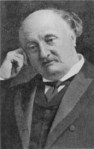
Johannes Eccard

Our very appropriate anthem is ‘When to the temple Mary went’ by Johannes Eccard. I would hazard a guess that anyone who has ever been a chorister would know this piece well, but would be unable to name another work of Eccard. Further, it is likely that this piece is better known in England than it is in Germany. Why? Because this piece is representative of a nineteenth-century vogue for translating continental pieces for use by the choirs and choral societies of the day. The Revd John Troutbeck, who translated Eccard’s ‘Maria wallt zum Heiligtum und bringt ihr Kindlein dar’ (no, I’d never come across this before, either!), also translated Bach’s passions into English, and it’s worth remembering that it’s only in the last 50 years that German has overtaken English as the norm for these pieces – and do we hear them as often? As for the Eccard, it’s possible that no other piece has been so frequently sung on one specific date in Anglican churches in the last 150 years.

It’s a wonder that John Troutbeck (1832-1899) found any time for his day job as Precentor, first in Manchester and later at Westminster Abbey, because his translations included works by almost every major composer, including many operas, and he also compiled a number of hymn books and chant books. In my opinion, Troutbeck made a very good job of the Eccard translation. Where Eccard had two verses with a repeated chorus, Troutbeck changed the words of the second chorus to make a more complete summation of the text, which is, of course, a free version of the Nunc Dimittis.

What, then, of Eccard (1553-1611)? His career was as a court musician, largely in the service of the Margraves of Brandenburg-Ansbach, firstly in Königsberg and later in Berlin, where he became Kapellmeister. This was a time of great development of Protestant German music and most of Eccard’s compositions are based on the chorale, some extensive, others like the current piece simple harmonisations of a chorale-like melody. He favoured rich textures and ‘When to the temple’ is in six parts, two sopranos and two basses, the latter creating depth in the sonority.
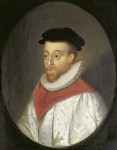
Orlando Gibbons

The responses will be my own recently completed setting using the music of Orlando Gibbons, who left only the opening preces. The psalm attached to these preces has been used as the source for a setting of the Lord’s Prayer and the second part of the responses.

We sing the canticles of Richard Farrant in G minor. There were a number of musicians by the name of Farrant in the sixteenth century, at least two Johns, a Daniel and Richard (c1530-1580). There is some confusion over the attribution of music between them, but Richard is the most significant figure. He held posts at Windsor and the Chapel Royal and wrote several plays, none of which survives, for companies that he set up primarily for his singing boys.

As a composer he is best known for two anthems, ‘Call to remembrance’ and ‘Hide not thou thy face’, and this service, described in Grove’s Dictionary as ‘High’ or ‘Third’ service, which suggests that it isn’t only his plays which are no longer with us. These three pieces owe their popularity to their inclusion in Boyce’s Cathedral Music (1760-1773), which was for some time the major source of repertoire for English cathedrals. It was Boyce who first established the key of G minor for this service despite earlier sources written a tone higher, and it is in G minor that we shall sing it. It is written in the style of a ‘short’ service, that is with little word repetition and a largely chordal texture. But the dramatist in Farrant found expressiveness in the antiphonal exchange of short phrases between the two sides of the choir.

The organ voluntary is the Prelude in C minor op.37 no.1 by Felix Mendelssohn, who was a fine organist and already writing music for the instrument at the age of eleven. It was almost inevitable that his organ music would be greatly influenced by his rediscovery of the music of Bach, and many of his works are preludes, fugues and other contrapuntal exercises, or works based on chorales. The Prelude in C minor of 1841 looks back to the baroque. It consists of a running quaver figure, which works through all the parts and at times invades the pedal part requiring nimble footwork, set against a slow moving harmonic background with complex Bach-like harmonies.

Damian Cranmer

Choral Matins: 19th August 2018

We are singing the second August Matins at St Mary’s in what I hope will become an annual event. It is sometimes possible, and I am guilty, to be pessimistic about Matins beyond the cathedrals of England. But in recent times, Isobel and I have attended matins at the Royal Hospital Chelsea, The Guards Chapel (with military band), the Temple Church, St Peter ad Vincula in the Tower of London, St Peter’s in St Albans, and at St Mary’s. We have our eyes on Hampton Court and St James’ Palace. It’s no coincidence that Matins is more readily available in and near the capital where the professional choir set-up is a major influence.

So, it’s great to be singing another Matins in Redbourn; and the music is a celebration of Ralph Vaughan Williams. Last month I was reflecting on the important work he did for the English Hymnal, and you may have noted him as one of the composers who reached, but did not pass, nine symphonies, in answer to the question I posed in a previous post. He is regarded as one of the quintessentially English composers, and his work covered every genre, hymn tunes, songs, chamber music, operas, symphonies and film music, and iconic works such as The Lark Ascending, the Sea Symphony and the Mass in G minor are among pieces which stand the test of time. His style was not entirely to everyone’s taste: Peter Warlock described his Pastoral Symphony as like “a cow looking over a gate”, and a one-time European colleague of mine commented that his music would have been better if it was all “on a theme by Thomas Tallis”.

Ralph Vaughan Williams (1872–1958)

Vaughan Williams was born in 1872 in the Gloucestershire village of Down Ampney, and this is the name that he gave to perhaps his most famous original hymn tune, intrinsically associated with the words ‘Come down, O love divine’. Appropriately in this VWfest, this is the first hymn in our service. It is one of the earliest that he wrote (c1905), and, of the 14 or so original tunes, the few that are in regular use are all early: ‘For all the saints’ and ‘Hail thee, festival day’ for instance. We sing the Te Deum and Jubilate from Vaughan Williams’ 1939 Service in D minor, “written for and dedicated to Dr CS Lang and his singers at Christ’s Hospital”. Craig Sellar Lang (1891-1971) was a New Zealander who was Director of Music at Christ’s Hospital from 1929 to 1945, when he retired to Cornwall to concentrate on composition. He edited the music for the Public School Hymn Book (1949), which included 18 of his own tunes, many with the names of Cornish towns, and over 20 descants to well known tunes. None of his music has found its way into HON, but some of the descants (like a dog, they aren’t only for Christmas!) deserve to be heard today. This is relevant because Vaughan Williams’ Service in D minor is very much a public school piece. As well as the usual four-part choir, there is an important and independent congregational part. A photograph on the school’s website of its chapel, with high and open space and inward-facing seating, prompts one to imagine the tremendous sound of perhaps more than 500 voices singing VW’s music. We may not have quite that number in August in Redbourn, but we intend to give the piece a good run for its money. As for the music, it’s not long before one recognises Vaughan Williams as the composer: the triple time with cross rhythms and flat 7ths are some of the features that show the influence of folk music and the English Tudors. The key changes easily from D minor to D major and F minor and the melodic line is fluent and singable.

The anthem is VW’s ‘O how amiable are thy dwellings’. The words of the first four verses of Psalm 84 are set to largely reflective music, before the mood changes and the last verse of Psalm 90 (“The glorious company of the Lord our God be upon us”) leads directly into the first verse of ‘O God, our help in ages past’. You could almost, but not quite, add Lang’s descant: the transposition would take the sopranos up to top C!

The closing voluntary for this service will be Vaughan Williams’ Prelude on the Welsh hymn tune ‘Hyfrydol’. (You have to ask a Welsh person how to pronounce this, but you can be sure it isn’t the obvious way!) We’ll sing this tune as our final hymn to the words ‘I will sing the wondrous story’. It is the most enduring of the many tunes written by Rev Roland Huw Pritchard (1811-1887), for some time minister in Bala. Hymn books vary in their noting of Vaughan Williams as the arranger of the tune. HON does, but English Hymnal doesn’t, for example. A quick look at the original on WIkipedia suggests that “tidying up” might be a better description of Vaughan Williams’ contribution.

Most of his arranged hymn tunes come from folk music, but it’s interesting that Vaughan Williams, who rejected much of English 19th century music, turned additionally to Celtic music of the time for inspiration.   The organ prelude is a straightforward setting with the tune in the top part and incorporating the repeat of the second part. But the tune is the only straightforward part of the piece. Everything else, and particularly the pedal part, goes at a much quicker pace and not always in the direction you might expect. A seat behind the organ would be instructive!

The responses are by Smith and the psalm is no.106 to a chant by Thomas Jackson of Newark (c1715-1781). Why are the chants often by people you’ve never heard of? Well I suppose it’s that short pieces – and chants are short pieces – are easier to write, and serious composers can’t always be bothered with short pieces, though there are some original ventures into chant-writing by Elgar and others.

Damian Cranmer

Choral Evensong Blog: Sunday 3rd June, 6.30pm

Richard Shephard

The responses are by Richard Shephard, a contemporary musician, not to be confused with Richard Sheppard, a composer of pre-Reformation Latin music in the first half of the sixteenth century. Shephard spent his early adult life in Salisbury undertaking several activities including as a lay clerk in the cathedral choir of Richard Seal, and it is to Seal and his choir that these responses are dedicated. They were published in 1985, the year that Shephard moved to York to take up the post of headmaster of the Minster School: a parting gift, perhaps?

The responses are interesting for a number of reasons. The intonations of the cantor are newly composed, the Lord’s Prayer is set for the choir, and the texture, while nominally in four parts (SATB) has many points where the voices divide, giving the music a varied and at times rich colour.

Thomas Attwood Walmisley

The canticles will be Walmisley in D minor. Thomas Attwood Walmisley (1814-1856) was the godson of the composer Thomas Attwood, with whom he had early composition lessons. At the age of 16, Walmisley was appointed organist of Croydon Parish Church, and three years later as organist jointly of Trinity and St John’s Colleges, Cambridge. At the age of 22, he proceeded to the post of Professor of Music at the university. This may have been as much a reflection of the sorry state of music in the university as of his undoubted prowess as a musician. It is greatly to his credit that he raised the status of the post he held and also the quality of his joint college choir, which was described in one instance as the best in England.

He suffered from bouts of depression from which he consoled himself with wine, both of which may have been the cause of his untimely death. The D minor Magnificat and Nunc Dimittis date from late in his life and are said to have been rescued by a colleague from the waste paper basket, a most fortunate occurrence as they remain his most popular composition and are widely sung today. My copy of this music is in a booklet produced by the RSCM to be performed at evensong around the country for the Festival of Britain in 1951. Walmisley is there alongside Tye, Weelkes, Purcell, SS Wesley and Stanford as part of the RSCM’s “endeavour to see that the music represents the best of all periods of the English school of composition” – more contemporary works were to be included in the service at the Royal Albert Hall.

The Magnificat is interesting because it alternates strong unison passages with more gentle music for upper voices. It can be used as an opportunity to involve the congregation in singing the canticles. There’s one other thing to note about the piece: the last verse of the Magnificat, ‘He remembering his mercy’, is repeated, so those waiting for ‘and his seed for ever’ to stand for the Gloria should not get up until they hear it for a second time!

John Stainer

The anthem is I am Alpha and Omega by John Stainer, a work of which I had no prior knowledge, though there are several versions on YouTube, which suggests that it is not unknown elsewhere. The words, designated for Trinity-tide, are from Revelation Chapter 1 Verse 8, followed by the Sanctus, and the music is in two equivalent parts, each introduced by a solo voice. The copies from our choir library are well used and originated from St Ann’s Church Newcastle-on-Tyne. It would be interesting to know when it was last sung in Redbourn (are there any records of music sung in church records?). If these well travelled copies are the result of someone finding it impossible to throw music away, as I do, it is very welcome. It is impossible to be certain of future tastes, and I have written about the reassessment of Stainer before now. Walmisley told an unbelieving audience in Cambridge that JS Bach would come to be recognised as unparalleled as a composer!

The voluntary is the first movement of JS Bach’s Sonata in C BWV529. This is the fifth of a set of six pieces often known as trio sonatas because they use the texture of the instrumental works by composers such as Corelli, often two violins and continuo. On the organ the two hands play on different manuals partly to get matching but different sounds, but also to keep out of each other’s way – the right hand is sometimes lower than the left. Meanwhile the feet provide a harmonic bass. So there are three independent melodic lines and, although you are playing only three notes at any one time, the interaction of their independence produces a challenge as great for the brain as the fingers!

Damian Cranmer