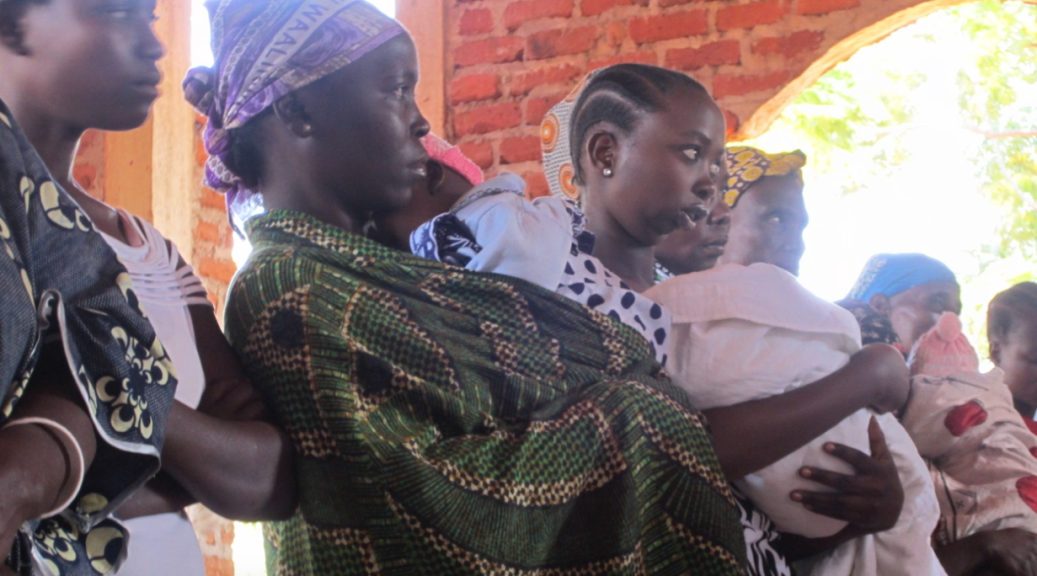
Many thanks to all who supported Sunday’s Cake Sale organised by the Mothers’ Union in support of the people of Chamnye in Tanzania with whom we have a special link.
This short video gives an insight into how the money raised by the Mothers’ Union in recent years has been used. Do turn up the volume on your computer to hear the wonderful music!
Great! Another Gibbonsfest for our March Choral Evensong! In fact it’s only the Byrd Responses which prevent a full house. Gibbons did write two sets of Preces with accompanying psalms, but apparently no responses for after the creed. I have always believed that John Barnard, in his First Book of Selected Church Musick of 1641, finished what Gibbons had started, but I can’t find any evidence for this at the moment. However, there is every reason to believe that, were this completion to exist, it would not be as good as the Byrd, which is probably the best of the early settings.
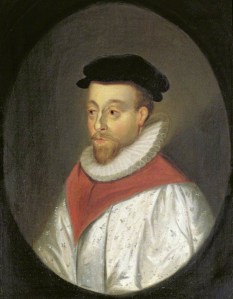
So we have the Short Service, the anthem “Behold thou hast made my days” and, as voluntary, the Fantasia in A minor by Gibbons. All this means that, with any luck, Jonathan will be playing the fine chamber organ. Orlando Gibbons was one of the greatest of the ‘Tudor’ composers, though most of his music was written in the reign of James I. He was one of the youngest (born 1583) and one of the most adventurous, and one wonders what he would have achieved had he not died at the early age of 41. There are several musicians who surprisingly have claimed Gibbons as their favourite composer, including the pianist Glenn Gould (yes, that’s surprising!). And Boris Ord, Director of Music at King’s College, Cambridge, chose Gibbons for what must have been one of the earliest single composer LPs of early music (1956). The follow-up LP (1959) of David Willcocks, Ord’s successor, completed a comprehensive view of Gibbons’ church music.
Gibbons’ Short Service is almost certainly one of the few canticle settings to have been sung regularly since its composition. The idea of a ‘short’ service, of which there are many examples, is that the words are rarely repeated and there is limited counterpoint. Gibbons managed to introduce interesting imitation within these constraints. The canon between treble and alto in the Nunc Dimittis Gloria is a masterpiece, but so well integrated into the music that it can easily be missed.
The anthem “Behold thou hast made my days as it were a span long” is a setting of the Prayer Book version of Psalm 39, verses 6-8 and 13-15, “made at the entreaty of Doctor Maxie, Dean of Windsor, the same day sennight before his death” (heading in a major manuscript at Christ Church, Oxford). As Anthony Maxey died on 3 May 1618, we can not only date this anthem, but also cerebrate in our performance 400 years since its composition. The anthem is also a good example of three matters which have caused debate over the last century: pitch, voice and instrumentation.
Pitch, very much interlinked with voice. I’ll look at four recordings of the anthem. It was recorded in the early 1950s for volume IV of The History of Music in Sound. By this time, the idea that choral music of the late 16th and early 17th century should be transposed up a minor third was well established. What Gibbons wrote in A minor was sung in this recording by the tenor Alfred Hepworth and the choir of Hampstead Parish Church in C minor, despite the solo part going up to B flat. The wonderful countertenor Alfred Deller had no trouble in singing at the same pitch for his recording released in 1971. More recently a group formed around Fretwork, the consort of viols (you can’t say viol consort), produced a recording with tenor soloist in the original key but with A at 466 cycles per second against a norm these days of A at 440, so effectively sounding in B flat minor. What’s the difference, you may well ask: well, only if you’re using unequal temperament, and that only works if you’ve got transposing instruments such as viols where you can tighten the strings. Jonathan certainly won’t be using this key, because the organ is at fixed pitch and he declared recently after playing Nicholson in D flat (5 flats in key signature as in B flat minor) that any key with more than 4 sharps or flats was an offence against the organist’s sensibilities – or words to that effect! Lastly, the Jesus College Choir’s recording of 2016 goes back to the original key of A minor with tenor soloist.
As for Voice. The argument about using a lower key than was prevalent in much of the last century centres on the alto line: there is a widely held view that in Gibbons’ time it was sung by high tenors and not falsettists or male altos, which only became the norm in cathedral choirs in the late 17th century. The part books of the Gibbons period are marked ‘contratenor’. So was Alfred Deller a contratenor, countertenor or a male alto? The French don’t have quite the same problem. The term haute-contre is applied to a high tenor singing in natural voice and not falsetto, and there are many heroic roles for such a voice in the operas of Lully and Rameau, while the Italian operas of the time (including Handel, of course) gave such roles to castrati. Therefore, if you’re using altos, male or female, you’ll probably use high pitch: for high tenors, it’ll be lower.
And then there’s instrumentation. Only the Jesus College recording of the four mentioned uses organ accompaniment; the others use strings, modern instruments for the HMS recording, and viols for the other two. Many of the early manuscripts of Gibbons anthems have the accompaniment written out on four separate lines suggesting instruments, and the counterpoint is clearly intricately worked out. The result is not possible to play with two hands. But it is not at all clear that instrumental ensembles were regularly available in churches. Several questions, then, but not many answers. And in the end the music speaks for itself whoever is singing, at what pitch and with what accompaniment.
The voluntary, Fantasia in A minor (Musica Britannica vol XX no.10), is a good example of the shape that Gibbons brought to his music. A long imitation point on a theme with decreasing note-lengths leads to a section with semiquaver scale passages in alternating hands, a challenging piece by a composer described also in a report on an official visit by the French Ambassador to Westminster Abbey in 1624 as “the best finger of that age”.
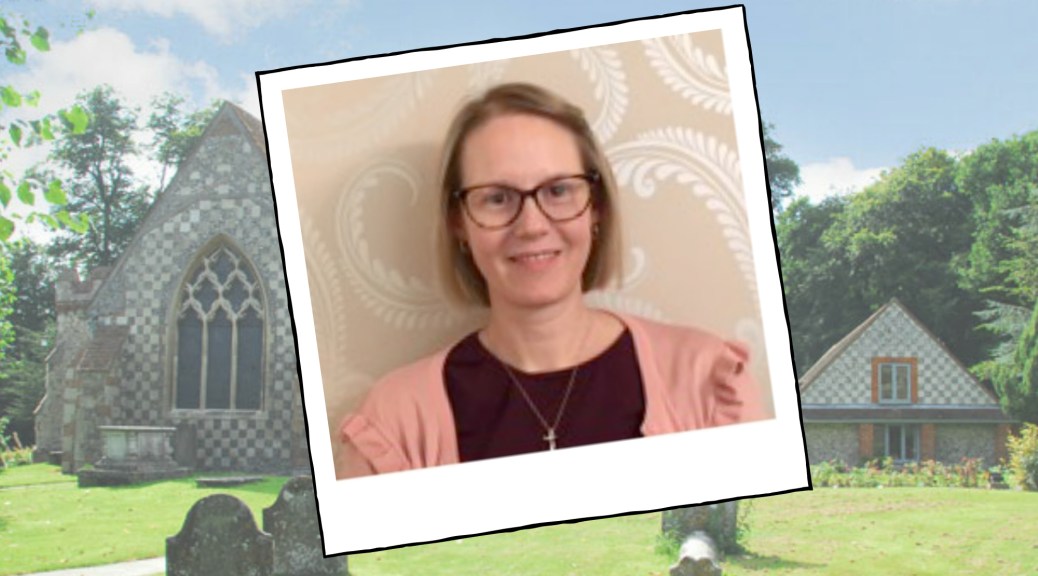
I’ve been asked to write a piece, by way of introducing myself to you all, to describe my journey into ordination training, which I am undergoing at St Mary’s, Redbourn. I was raised by Christian parents, who had a strong faith, and were actively involved in their local Baptist church. So it was natural for me to grow up believing in God. Until the age of 11 I lived in Stanmore, but my family became part of a free church that was opening a Christian school in Hemel Hempstead, so we moved to the town to be involved with the project, called The King’s School, now based in Harpenden.
In my teenage years I began to take my own steps of faith, I helped lead the Christian Union at my sixth form, Longdean School, and knew that I wanted to serve God all my life. I had been raised on stories of missionaries, and I took a gap year to attend a Bible College, thinking that God may call me to a mission field overseas. However, no such sense of call came, so on the advice of my minister I went to university, and studied Biology at Southampton.
Towards the end of my degree, I began to pray again about going overseas on mission, but had no clear sense of direction from God, then I met my husband to be, and all thoughts of overseas missions evaporated! We were soon engaged, and married the following year. I had considered being a teacher, but a research post at the hospital opened up, along with the opportunity to study for a PhD, so I spent 10 very fulfilling years in medical research, during which time I had my two sons, Joshua and David. Raising two boys has been a lot of fun, we enjoy going to the movies together; Lord of the Rings, Star Wars, Marvel and spy movies being favourites, as well as many hours spent discussing football….. (Chelsea and Southampton!)
We moved back to Hemel Hempstead, to be nearer to our extended family, and began to attend Soul Survivor, Watford. It is part of the Church of England, but meets in a converted warehouse, and has a contemporary style of worship and an informal atmosphere. I re-trained as a science teacher, and have been teaching at John F Kennedy Catholic School for 8 years now. I thought that was the last of my career changes, but God had other ideas! I was in a Sunday morning service when I had a strong impression that God was calling me to explore ordination training. It was completely out of the blue, and not something I had ever considered, and not the tradition I am from, so I took some time to read books about the Church of England, and argue with God, but after a few months the idea would not go away, so I began to discuss it with my minister, and then with the Church of England’s vocation officer, and finally the Diocesan Discernment Officer. I visited a variety of Anglican churches and completed placements at St Benedict’s in Bennetts End, and St Lawrence, Bovingdon, to learn more about the life of a parish church and priest. Finally, I was recommended for training by a Bishop’s Advisory Panel, after a 3-day conference, where I had to undertake various tasks including group presentations, discussions and in-depth interviews.
I am now in my first of three years of training, I attend St Mellitus College in London as a part-time student. This involves weekly evening lectures, nine residential weekends and one residential week per year for three years. I have regular assignments, mainly essays, to complete throughout the year. I am continuing to teach part-time, as I have two sons at university to support! After the college course is finished I will then continue training as a curate in a different setting for another three years. I am grateful that the diocese recommended St Mary’s as an ideal place to train, with its strong leadership team, rich traditions, and loving, friendly and outward looking community, not to mention the beautiful church and grounds. I am enjoying learning to worship in more traditional ways, in particular singing as part of the choir, as well as helping with the Gospellers youth group. I will also have to do some preaching as part of my training, the most scary part! I greatly appreciate the opportunities and support I’ve been given at St Mary’s. I look forward to getting to know many more of you in the time I have here.


 St Mary's Church, Redbourn