Category Archives: Choral Evensong Blog

Choral Evensong Blog: Sunday 4th March

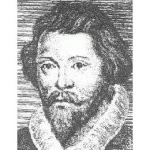
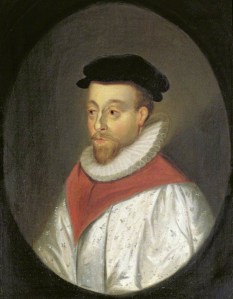
Orlando Gibbons

Great! Another Gibbonsfest for our March Choral Evensong! In fact it’s only the Byrd Responses which prevent a full house. Gibbons did write two sets of Preces with accompanying psalms, but apparently no responses for after the creed. I have always believed that John Barnard, in his First Book of Selected Church Musick of 1641, finished what Gibbons had started, but I can’t find any evidence for this at the moment. However, there is every reason to believe that, were this completion to exist, it would not be as good as the Byrd, which is probably the best of the early settings.

So we have the Short Service, the anthem “Behold thou hast made my days” and, as voluntary, the Fantasia in A minor by Gibbons. All this means that, with any luck, Jonathan will be playing the fine chamber organ. Orlando Gibbons was one of the greatest of the ‘Tudor’ composers, though most of his music was written in the reign of James I. He was one of the youngest (born 1583) and one of the most adventurous, and one wonders what he would have achieved had he not died at the early age of 41. There are several musicians who surprisingly have claimed Gibbons as their favourite composer, including the pianist Glenn Gould (yes, that’s surprising!). And Boris Ord, Director of Music at King’s College, Cambridge, chose Gibbons for what must have been one of the earliest single composer LPs of early music (1956). The follow-up LP (1959) of David Willcocks, Ord’s successor, completed a comprehensive view of Gibbons’ church music.

Gibbons’ Short Service is almost certainly one of the few canticle settings to have been sung regularly since its composition. The idea of a ‘short’ service, of which there are many examples, is that the words are rarely repeated and there is limited counterpoint. Gibbons managed to introduce interesting imitation within these constraints. The canon between treble and alto in the Nunc Dimittis Gloria is a masterpiece, but so well integrated into the music that it can easily be missed.

The anthem “Behold thou hast made my days as it were a span long” is a setting of the Prayer Book version of Psalm 39, verses 6-8 and 13-15, “made at the entreaty of Doctor Maxie, Dean of Windsor, the same day sennight before his death” (heading in a major manuscript at Christ Church, Oxford). As Anthony Maxey died on 3 May 1618, we can not only date this anthem, but also cerebrate in our performance 400 years since its composition. The anthem is also a good example of three matters which have caused debate over the last century: pitch, voice and instrumentation.

Pitch, very much interlinked with voice. I’ll look at four recordings of the anthem. It was recorded in the early 1950s for volume IV of The History of Music in Sound. By this time, the idea that choral music of the late 16th and early 17th century should be transposed up a minor third was well established. What Gibbons wrote in A minor was sung in this recording by the tenor Alfred Hepworth and the choir of Hampstead Parish Church in C minor, despite the solo part going up to B flat. The wonderful countertenor Alfred Deller had no trouble in singing at the same pitch for his recording released in 1971. More recently a group formed around Fretwork, the consort of viols (you can’t say viol consort), produced a recording with tenor soloist in the original key but with A at 466 cycles per second against a norm these days of A at 440, so effectively sounding in B flat minor. What’s the difference, you may well ask: well, only if you’re using unequal temperament, and that only works if you’ve got transposing instruments such as viols where you can tighten the strings. Jonathan certainly won’t be using this key, because the organ is at fixed pitch and he declared recently after playing Nicholson in D flat (5 flats in key signature as in B flat minor) that any key with more than 4 sharps or flats was an offence against the organist’s sensibilities – or words to that effect! Lastly, the Jesus College Choir’s recording of 2016 goes back to the original key of A minor with tenor soloist.

As for Voice. The argument about using a lower key than was prevalent in much of the last century centres on the alto line: there is a widely held view that in Gibbons’ time it was sung by high tenors and not falsettists or male altos, which only became the norm in cathedral choirs in the late 17th century. The part books of the Gibbons period are marked ‘contratenor’. So was Alfred Deller a contratenor, countertenor or a male alto? The French don’t have quite the same problem. The term haute-contre is applied to a high tenor singing in natural voice and not falsetto, and there are many heroic roles for such a voice in the operas of Lully and Rameau, while the Italian operas of the time (including Handel, of course) gave such roles to castrati. Therefore, if you’re using altos, male or female, you’ll probably use high pitch: for high tenors, it’ll be lower.

And then there’s instrumentation. Only the Jesus College recording of the four mentioned uses organ accompaniment; the others use strings, modern instruments for the HMS recording, and viols for the other two. Many of the early manuscripts of Gibbons anthems have the accompaniment written out on four separate lines suggesting instruments, and the counterpoint is clearly intricately worked out. The result is not possible to play with two hands. But it is not at all clear that instrumental ensembles were regularly available in churches. Several questions, then, but not many answers. And in the end the music speaks for itself whoever is singing, at what pitch and with what accompaniment.

The voluntary, Fantasia in A minor (Musica Britannica vol XX no.10), is a good example of the shape that Gibbons brought to his music. A long imitation point on a theme with decreasing note-lengths leads to a section with semiquaver scale passages in alternating hands, a challenging piece by a composer described also in a report on an official visit by the French Ambassador to Westminster Abbey in 1624 as “the best finger of that age”.

Damian Cranmer

Choral Evensong Blog: Sunday 4th February 2018

Choral Evensong returns after the season of carol services, and the next service in St Mary’s is on February 4th at 6.30.

Thomas Morley

We shall sing the Responses by Thomas Morley (1557-1603). Unlike the more familiar Responses of, say, Smith and Byrd, which are newly composed throughout and therefore more “interesting”, those of Morley and Tallis follow the melodic line of the everyday ferial responses. So, for most of the time, but not quite all, if you knew the traditional shape of the responses, you would be able to sing along with the choir. The other interesting point – well, it’s interesting to me – is that in both the Tallis and the Morley the congregational line is in the treble in the first part of the responses (the preces) but in the tenor for the second part (after the creed). I don’t know why this is, but I’m going to try to find out!

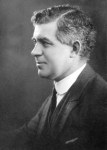
Sir Sydney Nicholson

The Magnificat and Nunc Dimittis will be sung to the setting in D flat by Sir Sydney Nicholson. Nicholson (1875-1947) held several organist posts before being appointed to Westminster Abbey. He gave up this post in 1927 to found the School of English Church Music (later to become The Royal School of Church Music – RSCM) because of what he saw as the poor state of music in parish churches (not Redbourn, surely!). He invested a lot of time and his own money in promoting the society through training courses for musicians at the College of St Nicolas in Chislehurst, and travelling the country conducting choirs. The measure of his success is that, by the outbreak of the Second World War, there were 1300 choirs worldwide affiliated to the School, and today that number is over 8000. In the year after Nicholson’s death the RSCM published a Commemoration Book containing much of his music, including the canticles in D flat. His compositions include anthems and several hymn tunes of which only three have found their way into Hymns Old and New, the most memorable being that to ‘Lift high the cross’.

Nicholson’s canticles illustrate his involvement with music for parish choirs, and so there is nothing over-complicated, except possibly for the key signature which moves between five flats and five sharps. There is little counterpoint and there is a strongly supportive organ part. For a time they were heard regularly in cathedrals, but like much music of the period they are no longer part of the staple diet. In parish churches, however, you are more likely to come across them.

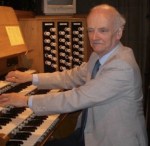
Martin How

The anthem is ‘O taste and see’ by Martin How, who was associated with the RSCM for much of his career before returning to organ playing in retirement in Croydon. It’s courageous to set these words, when the Vaughan Williams is so well known, but How manages to achieve something quite different. His purpose may be deduced from the dedication – For Michael Fleming and St Michael’s, West Croydon – and the footnote – Written in deep gratitude for John Loughborough Pearson, inspired church architect (1817-97). Pearson was heavily involved with the Gothic Revival, and, if you look at pictures of St Michael’s, you cannot help seeing similarities with St Pancras station, the work of Gilbert Scott, with which and with whom St Michael’s and Pearson were largely contemporary. The high vaulting produces an acoustic in which slow moving block harmonies are particularly effective, and this is what How achieves in his reflective anthem.

The voluntary is JS Bach’s Fugue in D minor BWV539. This is one of Bach’s arrangements of an earlier composition, in this case the second movement of Sonata no.1 in G minor for solo violin, which has resulted in the organ work being known as the “Fiddle Fugue”, not that the violin is often referred to as a fiddle these days except in the context of folk music. Bach spent a lot of time transcribing his own music and that of other composers, and he, like Handel, was a very swift worker. I’m not sure that I could write out Messiah in the three weeks that it took Handel to compose it! But Handel, the great improviser with all the music in his head, scarcely looked up from the page that he was writing. Bach, on the other hand, was more methodical, and in this transcription from violin to organ there is very little change, just the occasional elongation of a phrase to accommodate a pedal statement of the fugue subject.

Damian Cranmer

Choral Evensong Blog: Sunday 1st October, Harvest Festival

First a short follow-up to the Choral Matins of August. This was well supported by both choir and a congregation of over 50 and I hope we may be able to sing this service, now rare in parish churches, again soon. I spoke to one current member of the congregation who first sang Matins in St Mary’s choir in the early 1940s. Someone should gather the reminiscences of such people together; and there are photographs of the choir in 1920 and 1996 in the vestry but nothing in between. Who has any material?

There’s a new (well I’ve only just come across it) website for Choral Evensong, titled appropriately choralevensong.org.  It lists services by locality and I was pleased to see that St Mary’s is listed, but as yet there is no picture and no detail of the music: both can fairly easily be remedied, I hope. It also gives links to related articles and there is a good one from Religion News Service at the moment on the growing popularity of the service. Our Evensong this month is for the occasion of Harvest Festival.

Thomas Tomkins

The responses of Thomas Tomkins will get a second airing; I wrote about the longevity of Tomkins (1572-1656) in relation to these responses in July. I’ve been listening to some of his music recently and it’s interesting how little his choral music differs in style from the norm of 1600. At times he almost outdoes Gibbons in his use of false relation. One of his best pieces is “When David heard”, published in 1622 in his Songs of Three, Four, Five and Six Parts, the last but one of the many madrigalian publications of the Elizabethan and Jacobean composers.

Heathcoate Statham

The canticles will be sung in the setting in E minor by Heathcote Statham (1889-1973). Heathcote, by the way, is a first name, but Statham (doesn’t sound right, does it?) has never managed to lose it, unlike contemporaries such as Dyson, Darke and Howells. For the majority of the First World War, he was organist at the cathedral in Calcutta, but returned to St Michael’s Tenbury, where he had been a chorister, to take up the post of organist in 1918. But the greatest part of his active life was as organist of Norwich Cathedral (1928-1966), and the E minor Magnificat and Nunc Dimittis were written in the middle of this time. The style is in keeping with the prevalent idiom of church music in the first half of the last century, but the changing time signatures show an awareness of the rhythm of the words and an ability to avoid stock patterns. The tonality is mostly E minor, but one section of the Magnificat and all of the Nunc Dimittis are in E major.

Herbert Brewer

The anthem is “Blessing, Glory, Wisdom and Thanks” by Herbert Brewer, a setting of words from Revelation and Psalms 148 and 106, which was composed for the Gloucester Diocesan Choral Festival in June 1909 and is eminently suitable for such a festival as this.   We have noted before how important these festivals were and how much music was written for them. The piece is in three sections corresponding to the three sources of the text and the organ part is significant. Wikipedia claims that Brewer (1865-1928) “lived in Gloucester his whole life” but that seems a little wide of the mark. He grew up in Gloucester and was organist at the cathedral for over 30 years from 1896, but held posts in Oxford, Bristol, Coventry and Tonbridge in the intervening years. His work in Gloucester involved much activity outside the cathedral, particularly in relation to the Three Choirs Festival, which he conducted on eight occasions, and for which he wrote several major works on both serious and light-hearted subjects. Of his compositions, Grove’s Dictionary (4th edition 1940, and unchanged in today’s online version) stated that “he seemed happier in the concerts of the Shire Hall than in the cathedral.” Sadly, in the light of this, he is known today mostly for his Magnificat and Nunc Dimittis in D which remains in the repertoire of cathedrals and which St Mary’s choir have sung on a number of occasions.

Fela Sowande

The voluntary is Obangiji by Fela Sowande (1905-1987), a Nigerian musician who is regarded as the father of modern Nigerian art music. His early education was based on the cathedral in Lagos and was in traditional European music. He came to London in 1934 and contributed widely to the musical scene. He was the soloist in Gershwin’s Rhapsody, played with Fats Waller and accompanied Adelaide Hall on the organ. He went back to Nigeria for a time before settling in the USA where he held several research and teaching posts. He composed extensively and, although I have not heard Obangiji, we can be fairly certain that there will be more to this piece than the traditional organ postlude.

Damian Cranmer