Category Archives: Articles

Inspiring, guiding, encouraging…

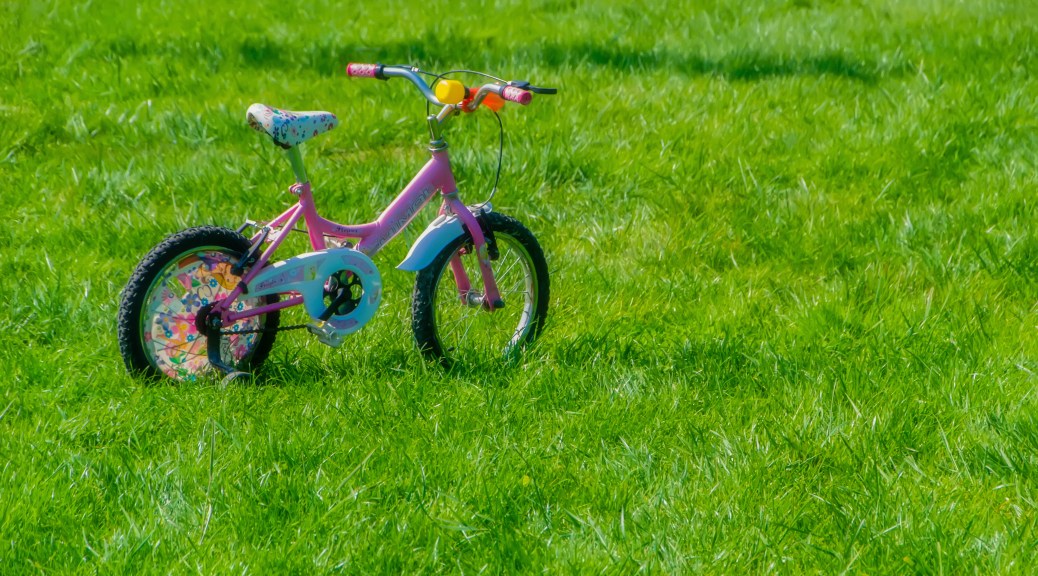
Do you remember the very first time you ever rode a bike all on your own?  Do you remember that feeling of excitement mixed with an equal sense of foreboding as you pedalled that first, short, wobbly distance?  The excitement was in doing something you had never done before; the foreboding was in the almost certain knowledge that sooner rather than later your sense of balance would desert you and you would fall off your bike.  The next frightening moment was when you learned to signal which meant having to take one hand off the handlebars with the further wobbles and the tumbles that that may have involved.  But as your technique improved every time you rode your bike you could think back to the bruised and bloodied knees of those early days and know that it had been worth it.

When Jesus appeared to his disciples after his rising from the dead, they were overjoyed to see him and yet they couldn’t help noticing that he still carried the wounds he suffered at his crucifixion.  They saw the marks of the nails in his hands and spear in his side and most of them would have remembered how they had abandoned him at the time when he needed them most.  But he did not blame or scold them, he wished them peace.  What was done was done and he wanted them to have peace of mind and concentrate on the future.  His wounds would remain an eternal sign of the cost of love and a lesson they’d learn for themselves in time.

From the moment we were born, life has been a constant learning process.  Over the years we have all had opportunities to learn new skills.  When we attempt something that is unfamiliar or complicated we have to make allowances for the mistakes we shall make in the process.  If we are seriously committed to what we have begun, we may have to allow ourselves some extra time and patience until, gradually, we are able to move forwards from ‘beginner’ to ‘proficient’ and maybe even to ‘expert’ status.

The strange thing is that we do not always make allowances for ourselves or for others as we learn the biggest and most important lesson that will ever challenge us: how to live as a fallible human being in a world that is itself far from perfect.  We have a lifelong path of discovery to take if we are to be rewarded with a quality of goodness at the heart of us.  Everybody stumbles and falls on the way, so it is important that we shouldn’t feel discouraged and give up altogether.

God knows that we are learners in life.  He sees the ‘L’ plates which are invisible to us and to others.  He still loves us when we fall far short of perfection and asks just one thing of us: that we ‘dust ourselves off and try again’.  At Pentecost Jesus again tells us to be at peace, however battered and bruised we may feel.  We are still learning to be like him and God makes allowances for that by sending us the Spirit of love and encouragement to help us make a fresh start at all those times when that is just what we need.

Will

Fake News or Good News?

“When I use a word,” Humpty Dumpty said, in rather a scornful tone, “it means just what I choose it to mean – neither more nor less.”

“The question is,” said Alice, “whether you can make words mean so many different things.”

“The question is,” said Humpty Dumpty, “which is to be master – that’s all.”

Lewis Carroll in ‘Through the Looking Glass’ puts his finger on a major issue.  Words can mean exactly what you want them to mean.  And when it comes to the political landscape and current world affairs the euphemism ‘We live in interesting times’ seems to apply.

Fundamental to so much of what has been happening has been the way in which words are used, often with threat and intent, and yet often we’re not sure what it is that has actually been said at times. I don’t think we can blame Brexit for this or lay all the blame at the door of the White House. I think, rather, that it’s the other way round – that recent events in the world are the product of a shift in culture and the way we live and view the world.

Something strange happens when the Internet becomes synonymous with your world. If you only inhabit a digitized space of memes and rage, where partisan expression is the lingua franca of the realm and being on the “right side” is a badge of honour, then bothersome things like evidence, data, and knowledge are steamrolled by ideological fervour. We trust the right to express our feelings above everything else; and since we all have feelings, what we think and feel is equally important and worthy. We’re all somehow experts of expression.

But that is a world where expertise means nothing – where wisdom, skill and knowledge are treated as irrelevant. It’s also a world that gives cover to corrosive ignorance.

We live in a time where ‘fake news’ and ‘alternative facts’ seem to have an equal currency with anything based on what I would see as core values like honesty, integrity and justice.

And, paradoxically, when we see every opinion as equally valid and with equal merit – rather than seeing an increase in democracy and freedom we actually cease to have a framework with any values, meaning, morals or truth at all.

The Christian faith is about God honouring every human being and loving each with an equal love. And yet it is also about recognising within that framework of love that some people are better at some things than others. If we are to honour God fully it is about recognising the gifts that each has been given and using them to the full for the benefit of all; not denying the gift to create a sort of false equality.

The political system works on this basis. Every adult gets a vote which is equally valuable. And yet there is an assumption that that some people are better at some things than others, and so we delegate our responsibilities and decisions to them. The heart of good democracy is not about everybody having an equal say on every issue (we could be in danger of seeking a referendum for every major decision if we’re not careful) but rather recognising that we vote, empower and then trust others to get on with making those decisions wisely and well.

As we approach a General Election, my prayer is that we would return to a time when what is said is what is meant, and that what is meant honours the value of every human being. I believe in a God who cares passionately about every person – this is the Good News of Jesus Christ. I hope and pray that what unfolds in the coming weeks would be truthful and honourable and that whoever is elected would actually want to serve all people, and not just their own. And that it would be a time where the voices and the needs of the most vulnerable are equally heard and valued and responded to. This really would be Good News.

Will

The Parable of the Bridge Builder

Once upon a time, there were two brothers. Their father had a large farm and when he became too old to work, he called his sons to him. “I am too old to work anymore,” he said. “I will divide my farm in half and give each of you one half. I know that you will always work together and will be good friends.”

When the brothers first started farming on their adjoining farms, they were the best of friends and would share everything together. Then, one day there was an argument between the two brothers and they stopped speaking to one another. For many years, not a word was spoken between them.

One day, one of the brothers was at his house when a carpenter came to his door and said, “I would like to do some work. Do you have any work that I can do?” The brother thought for a moment and then replied, “I would like for you to build a fence on my property. Build it down near the stream there that separates my farm from my brother’s. I don’t want to see my brother anymore and I would like you to build a high fence there please. I’m going into town and I’ll be back this evening.

When he came back that evening, he was shocked to see that the carpenter had not followed his instructions. Instead of building a high fence there, he had built a bridge over the stream. The man walked down to take a look at the bridge, and as he did so, his brother walked toward him from the other side. His brother said, “After all the terrible things I’ve done to you over the years, I can’t believe that you would build a bridge and welcome me back.” He reached out to his brother and gave him a big hug.

The brother then walked back up to his farmhouse to talk to the carpenter. “Can you stay?” he asked. “I have more work for you to do.” The carpenter answered, “I’m sorry but I can’t stay. I have to go, for I have many other bridges to build.”

Author unknown


Sometimes we have disagreements with members of our family or amongst friends. It started small but nobody is willing to back down or make the first move and now we’re stuck with division, suspicion and bad feeling. Sometimes we fall out with a neighbour and we stop talking and just mutter and chunter instead. Sometimes we even fall out with God, blaming Him for what is happening in our lives and we fall away from church.

Lent, which begins on 1 March, is a great time to ‘build some bridges’, to heal those divisions that eat away at us, and to join ourselves with the reconciliation, hope and love that we find in Jesus. As this parable reminds us, it is never too late…

Will