As we approach November each year, our minds naturally turn to remembering those who had died and whose loss we still feel, whether it was many years ago or recently.
This year takes on some added significance as we remember 100 years since the end of World War One. World War One had a massive impact on our country. The enormous number of casualties meant that the way of mourning the dead changed for ever. Gone was the very public way of marking death – the wearing of black and public periods of mourning, gone were the family photos with the deceased. Instead, death, and the mourning that followed, became a much more private and hidden affair.
The result is that today very few of us witness the death of someone, except in the case of close member of the family. As such, the effect of losing a loved one can be even more devastating for those affected. Combined with the sometimes hidden nature of grief and loss in our society, this can make life very difficult. At St Mary’s, a place where many of the dead of this village lie at rest, we hold this ministry to those affected in very high regard.
With that in mind we have set up a new bereavement visiting group. The aim is to have 5-6 people – lay and ordained, men and women – who have been trained to help as a first point of contact for those who are mourning.
They are available to anyone who feels like they could do with a friendly, confidential chat, no matter how recent or long ago the bereavement took place.
If you, or someone you know feels they could do with this kind of support, then we would be glad to hear from you and help you. Please get in touch either on bereavement@stmarysredbourn.org or via the Parish Office on 01582 791 669.
In the first week of August, twenty four members of the St Mary’s congregation travelled to Durham, Lindisfarne and Whitby on a four-day pilgrimage. Four members of the group share below their memories and reflections on this special journey.
Day 1: Grantham, Ripon and Durham
written by Kate Ford
As pilgrims arrived at St Mary’s from every corner of the village and beyond, buggies and walking sticks, buckets and spades, raincoats and sun hats, and suitcases large and small were loaded onto the two waiting minibuses. We were a group diverse in age, decades-old friends and new ones made just that morning, choosing to go on this journey for so many different reasons but travelling together as a happy band of pilgrims.
Our first stop was St Wulfram’s Church in Grantham – one of the largest medieval churches in the country (it seats 700!), with a fascinating history, and excellent outreach into the local community. This sense of old and new, the church’s history and future, was striking during our short visit.
Down in the crypt (built in c.1350) we spent a quiet time of peace and prayer together, pondering how many knees through the centuries it takes to wear down almost an inch from the stone step to the altar, and what a privilege to join its 600 year history of visiting pilgrims and worshippers. Upstairs in in the church there is a real ‘buzz’ – a daily community café in one of the large side aisles, (their ‘Coffee on the Common’!), a huge and welcoming children’s play area for use during services, a new curate in the first months of her ministry who welcomed us so warmly, and all sorts of innovative events running throughout the year to make St Wulfram’s a lively hub for the community. We were impressed and inspired by the way this ‘ordinary’ and extraordinary church is meeting the challenges of keeping its history and traditions alive, and staying relevant to an ever-changing community.
As an aside, I was touched by the warm acceptance of the littlest pilgrim’s babbling ‘prayers’ during a time of quiet in the crypt, and this kindness from the group continued throughout the week, with encouragement that the children needed to explore in their own ways the special places of worship we were visiting.
Our next stop was Ripon Cathedral where we were given another incredibly warm welcome and a delicious lunch. People have been coming to worship and pray at the site of the cathedral for 1,350 years, and climbing down the narrow, well-worn stone steps to the seventh-century crypt was a very special and memorable experience for this very reason. What a tiny part we were in the history of pilgrims travelling to that sparse and tiny room, each bringing our own unique prayers to the simplest wooden altar.
Just as this reminded us of our tiny part in a huge Christian family through history, we were then given two lovely illustrations of the ‘smallness’ of that family across the world. The chaplain who greeted us was the sister of a former vicar of St Mary’s, who is buried just outside the South Door of the church, (she was so touched that he was fondly remembered by Doris), and also our excellent volunteer cathedral guide began his tour by telling us that his sister had lived in Redbourn and he had visited St Mary’s himself. Two hundred miles from home, we had found Redbourn connections with some of the first people we met on our pilgrimage. Later in the day we chatted about how going into a church anywhere in the world often gives a feeling of being ‘home’, even if we haven’t visited it before, and the people in it feel like family, even though we’ve never met. What a lovely reminder of that.
After Ripon we arrived at our pilgrimage home for the week, St Chad’s College in Durham, which sits just across the road from Durham Cathedral, overlooked by its magnificent rose window. For Andy and I there was an added sense of coming home as we both studied at St Chad’s (and we met there!), and returning to stay there with our boys and members of our St Mary’s family was really special.
A convivial dinner in the college dining hall was followed by a time of reflection and discussion about our day – the places we had visited, people we had met, what had moved and inspired us, and where we had found God. A simple service of evening prayer in the celtic tradition ended the first day of our pilgrimage.
What could have been just a long minibus journey with a few rest stops had instead been a fascinating and inspiring day, and we were all grateful for the thought and planning that had gone into it.
Day 2: Durham Cathedral and Lindisfarne
written by Eleanor Petch
Day 2 of our pilgrimage started with Morning Prayer in the beautiful wooden chapel at St Chad’s college. We prayed for the day ahead and also for the intentions which had been submitted by parishioners from St Mary’s. The chapel was a really lovely space to be quiet and reflective ahead of our busy day.
St Chad’s College Chapel
After breakfast we walked up the short hill next to the college for our tour of Durham Cathedral. We were so lucky to have an incredibly inspirational volunteer guide, who was not only extremely knowledgeable, but also really gifted in telling the story of the cathedral. She showed us the tomb of St Bede and the Norman stonework, as well as some beautiful modern artwork including a statue of the Annunciation and a table made from the wood of the old belltower. It really showed how the cathedral is continuing the centuries-old tradition as a place of worship for its current congregation and visitors. The tour finished at the shrine of St Cuthbert, where we knelt to pray on stones that have been used by pilgrims over many centuries – a special opportunity to connect with other pilgrims and their prayers.
After the tour we celebrated mass in a small chapel at the side of the cathedral – a lovely intimate space for our group after the high ceilings and crowds in the main cathedral building. Some of us enjoyed looking around the Open Treasure exhibition of artefacts relating to pilgrims and worship at Durham through the ages. And if the cloisters we walked through seemed vaguely familiar it may be because they were used to film scenes from Hogwarts in the Harry Potter movies. For some young visitors (and older ones too) a particular highlight was seeing the Lego model of Durham Cathedral – including the Lego bellringers and Lego stained glass windows.
In the afternoon we travelled to Lindisfarne, timing our journey so that the minibuses could cross the causeway without getting wet wheels! Our first stop was at the church of St Mary’s, where we held a renewal of baptismal vows service. It was lovely to do this together as a pilgrimage community, and also that some other visitors to the church joined in with our prayers and celebrations. After the service we were able to visit other sites on Lindisfarne, including the ruins of the old priory founded by St Aidan over 1400 years ago. Several of the group enjoyed visiting the beach and ice cream shops – and I even spent a few moments of quiet prayer in the small modern Roman Catholic church of St Aidan.
After our visit to Lindisfarne, it was another long minibus journey back to Durham – a chance to chat, or snooze, or watch the beautiful Northumbrian scenery roll by. After our delicious dinner in St Chad’s refectory, we finished the day where we had started, with prayers in the wooden chapel. Even during the few days of our pilgrimage journey it was good to start and end each day with the thoughtful words of the Northumbrian Community time to reflect on our experiences and our prayer intentions.
Day 3: Whitby
written by Michael Wood
Our day started with Morning Prayer in St Chad’s chapel, an early start but well worth the time spent in prayer as we prepared for the day. I do like a full English breakfast and the kitchen staff did not disappoint and we were then ready for our trip to Whitby.
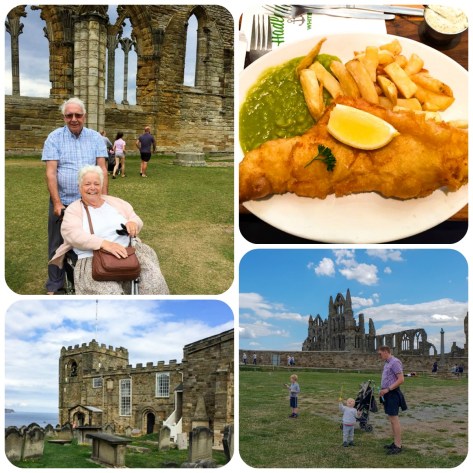
Once we got past Middlesbrough, we had a lovely drive through the beautiful North York Moors which ended with Whitby Abbey coming into view. It is an amazing place perched on the cliffs overlooking Whitby Bay. We shook out the stiffness of the journey and met up with Louise and Rod who had come over from their new home in Beverley to join the Redbourn Pilgrims for the day. We then headed to St Mary’s Church which lies in the shadow of the Abbey.
The original building dates to around 1110 but the inside has a cluttered feel; full of high sided box pews and a three-decker pulpit. Some of the pews had “for strangers only” on the door and I guess sitting in the wrong pew would have caused a serious issue! There is also a gallery running round the nave and transept. We headed to the chancel for a Eucharist led by Tim and it was lovely to be joined by a couple from Japan who were in holiday in the area as we remembered St Hilda and Caedmon. We were all then anointed by Christine who led a very prayerful healing service.
Following the service, we had time to explore Whitby, starting with the 199 steps down to the town. It is amazing to think of all the people who would have walked those steps over the years. We split into smaller groups as the town was very busy and headed for lunch. It had to be fish and chips in Whitby and very nice it was!
Lunch was walked off along the quay and out to the pier. From a personal perspective I found this part difficult as it brought back memories of my late wife. I was grateful for the support and friendship of the group to help me through the rest of the visit.
Back up the steps we went to join together before a visit to the Abbey. It is an incredible place even as a ruin and fortunately no sign of Dracula. We grouped together in the Sanctuary to say some prayer to St Hilda and a for group photo.
Having said our goodbyes to the McPhee’s we returned to Durham for home-made lasagne for dinner. Pilgrims need lots of food and drink to sustain them on their journey! After dinner we retreated to one of the common rooms in the college for our daily reflection and Compline. A lovely time to share experiences from the day and commit our thoughts to God.
Then the Quiz! A few bottles of wine helped to stimulate the little grey cells as we split into four teams with Tim as the quizmaster. A very enjoyable time was had with something for everyone in the quiz – well done Tim. The winners took the prize by just half a point! There was still time to chat over the last drops of wine before retiring to bed, quite late actually.
My lasting memories will be the new and strengthened friendships among the group. It was lovely to have spent time exploring our relationship with God and each other.
Day 4: The Return to Redbourn
written by David Mitchell
The fourth day of the pilgrimage was largely occupied with the return from St Chad’s College, Durham, to St Mary’s. I was sharing the driving of one of the minibuses with Andy Ford and the drive was fortunately uneventful. The minibuses were not travelling in a convoy and we all met up for a very pleasant lunch at the Railway Arms, Thorpe-on-the-Hill, near Lincoln.
The previous three days had been a truly invigorating experience. Part of the purpose of the pilgrimage was to follow in the footsteps of the Northern Saints and learn how they helped bring Christianity to this area. St Wilfrid’s c633-c709 who founded a Monastery at Ripon, St Cuthbert c.634-687 and St Aidan, and their connection with Lindisfarne; St Hilda who founded a 7th century Abbey upon which the iconic Whitby Abbey now stands. One cannot fail to mention the Venerable Bede who scholarly work covers the history of Christianity during this period.
Holy Cross Chapel, Durham Cathedral
Apart from morning prayers and compline, each day at St Chad’s where we shared the experiences of the day, we also took communion in the Holy Cross Chapel, Durham Cathedral. This period of prayer and reflection brought us closer to our heavenly Father.
For me, perhaps the most poignant was in the chancel of St Mary’s Whitby, where Rev’d Tim presided over communion which was followed by a Healing Service conducted by Canon Christine Farrington. It was not just the nature of the services but they were conducted in the small intimate chancel where we were all physically and spiritually much closer together. While the services were being conducted some of the visitors to the church chose to join us in the chancel and the main body of the church, and the receive communion. This included a Japanese couple who came and sat opposite me.
Those with whom I have discussed the pilgrimage all felt that it brought us closer together and closer to God. I know it is an experience many of us would like to repeat because one of the major topics of conversation on the return journey was whether or not another pilgrimage could be organized next year.
In that regard, many thanks must go to those who helped in the organization and services and thanks must particularly go to Rev’d Tim for all the hard work he did in devising the program and making the day to day arrangements for our stay.
If you don’t like sport then this summer will have been hard for you. With the World Cup in June and July, and the European Championships and a compelling Test cricket series against India as I write, there has been plenty to enjoy for those who love their sport and lots to try and avoid if you don’t. And that’s before the great sporting contest of the St Mary’s vs Christ Church 20/20 game on Sunday 2 September at 2 pm on the Common! (Do come along – it should be good fun!)
Whilst that may not reach the pinnacle of all sporting achievement this summer, high levels of sport does require sheer determination from those who compete, and the determination to push the boundaries of what can’t be done until those things become achievable. As we watch athletes of so many different sports I am reminded that we are born to strive, and as we strive to become better followers of Jesus Christ, more loving, more generous caring people I think that we, like those athletes we have witnessed over the summer, become more fulfilled.
Christians don’t expect that their life of discipleship will be easy; it can be hard to love your neighbour, it requires commitment to sustain a life of prayer and worship, it can sometimes feel quite challenging to be generous, and yet we are called to do all these things by a God who was prepared to give up his Son for the sake of humanity. Surely the image of Jesus on the cross (St Paul reminds us) is the reason we should keep our eyes on the finish line in our race of life, because out of that situation comes the hope of the resurrection and being one with God, which is our ultimate fulfilment – how we were created to be.
In sport the majority of competitors will face failure at times; but the greatest sporting stories are the stories of those who have overcome failure and ultimately achieved success.
Their example gives those of us who have embarked on a faith journey great encouragement, and points us to the level of determination we need to succeed in our lives, especially when things go wrong. One other reflection from the sport is that although athletes compete with each other there is often a palpable sense of support and mutual encouragement as they strive to achieve greater things.
Whilst the church is not essentially about competing with one another it is a group of people who encourage one another in the journey of faith, and that mutual support sustains and refreshes us as we follow countless millions of Christians on the journey of faith following in the footsteps of Christ. May you be blessed in your own journey of faith and may we continue to encourage one another as we journey together.




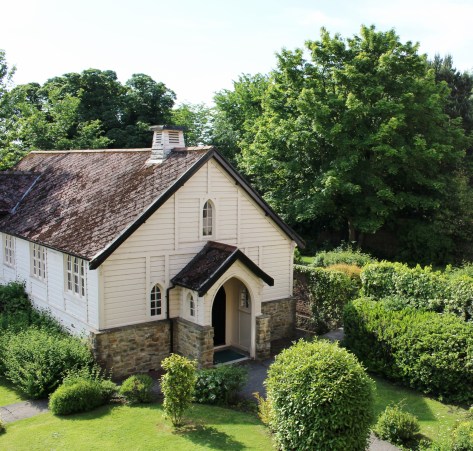



 St Mary's Church, Redbourn